

What your child eats every day has a direct impact on their teeth. While brushing and flossing are essential, diet plays an equally important role in preventing cavities and keeping smiles healthy.
Some foods naturally protect and strengthen teeth, while others feed harmful bacteria and increase the risk of decay. Understanding the difference can help you make smarter choices for your child—without making mealtimes complicated.
Why Diet Matters for Your Child’s Teeth
Children’s teeth are more sensitive to sugar and acids than adult teeth. When kids eat sugary or starchy foods, bacteria in the mouth produce acids that attack the enamel.
Over time, this can lead to:
- Cavities
- Tooth sensitivity
- Gum problems
- Early dental issues
The good news? The right foods can actually help protect and strengthen your child’s teeth.
Best Foods for Children’s Oral Health
Let’s start with the foods you’ll want to include regularly in your child’s diet.
1. Dairy Products (Milk, Cheese, Yogurt)
Dairy is one of the best choices for strong teeth.
Benefits:
- Rich in calcium and phosphorus
- Helps strengthen enamel
- Neutralizes acids in the mouth
Cheese, in particular, can help balance pH levels and protect teeth after meals.
2. Crunchy Fruits and Vegetables
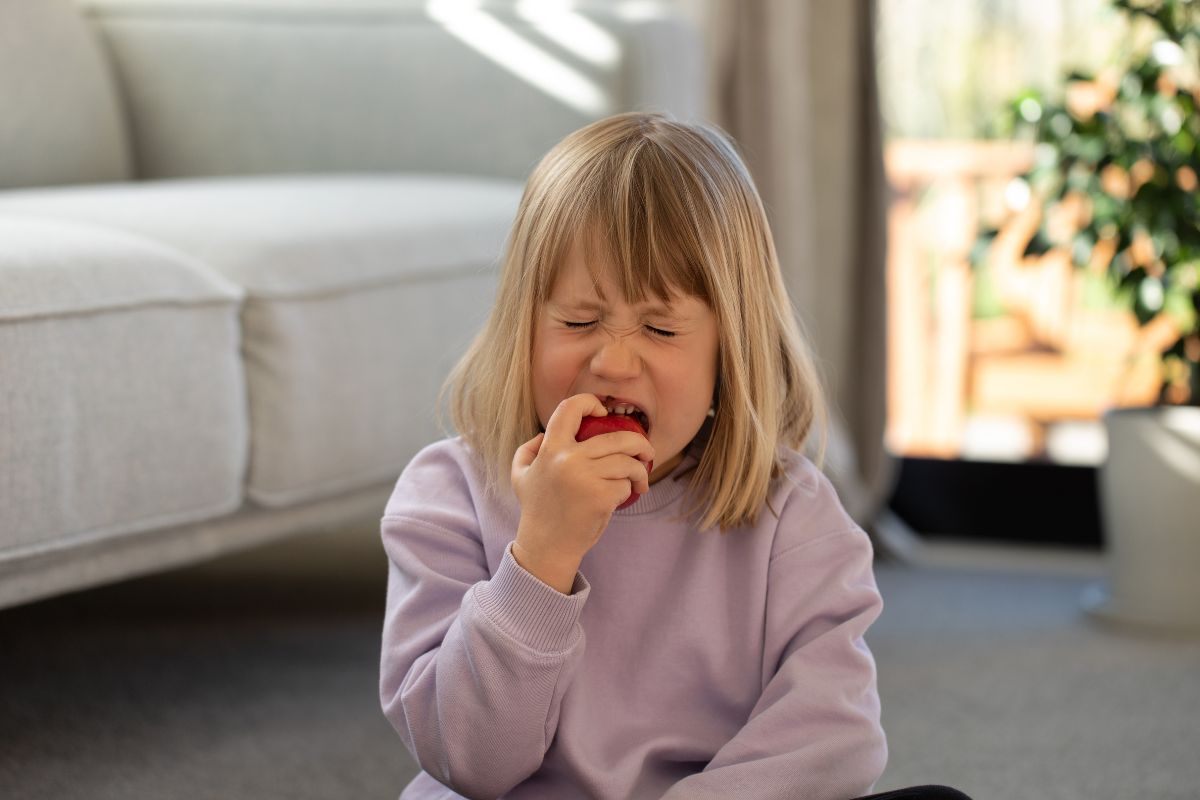
Foods like apples, carrots, and celery act as natural cleaners for teeth.
They:
- Stimulate saliva production
- Help remove food particles
- Gently scrub tooth surfaces
These are great snack options that are both healthy and tooth-friendly.
3. Leafy Greens
Spinach, kale, and other greens are packed with vitamins and minerals.
They:
- Support gum health
- Provide essential nutrients for tooth development
- Strengthen overall oral health
Adding greens to meals is a simple way to boost nutrition.
4. Nuts and Seeds
If your child is old enough to safely eat them, nuts and seeds are excellent choices.
They:
- Contain healthy fats and minerals
- Help strengthen enamel
- Are low in sugar
They also make a great alternative to processed snacks.
5. Water
Water is one of the most important—and often overlooked—parts of oral health.
It helps:
- Wash away food particles
- Reduce acid buildup
- Keep the mouth hydrated
Encouraging your child to drink water instead of sugary drinks can make a big difference.
Worst Foods for Children’s Teeth
Now let’s look at the foods that can harm your child’s oral health if consumed too often.
1. Sugary Snacks and Candy
Sticky candies, gummies, and chocolates are major contributors to cavities.
Why they’re harmful:
- Sugar feeds bacteria in the mouth
- Sticky textures cling to teeth
- Increase acid production
If your child does have sweets, it’s best to have them during meals rather than as frequent snacks.
2. Sugary Drinks
Juices, sodas, and flavored drinks are some of the biggest culprits.
They:
- Contain high levels of sugar
- Coat teeth in acids
- Increase the risk of decay
Even “healthy” juices can be harmful if consumed frequently.
3. Sticky and Chewy Foods
Foods like dried fruits, caramel, and chewy snacks can stick to teeth for long periods.
This allows bacteria to:
- Feed on sugars longer
- Produce more acid
- Increase cavity risk
These should be limited or followed by brushing.
4. Starchy Snacks
Chips, crackers, and white bread break down into sugars in the mouth.
They:
- Get trapped between teeth
- Feed cavity-causing bacteria
- Are often eaten frequently
Choosing whole-grain options can be a slightly better alternative.
5. Acidic Foods and Drinks
Citrus fruits and acidic beverages can weaken enamel over time.
While they can be healthy in moderation, excessive consumption may:
- Erode enamel
- Increase sensitivity
Balance is key when including these in your child’s diet.
Smart Snacking Tips for Parents
Helping your child make better food choices doesn’t mean eliminating treats completely.
Here are some simple strategies:
- Limit snacking between meals
- Offer water instead of sugary drinks
- Pair sweets with meals instead of eating them alone
- Encourage brushing after snacks when possible
Small changes can lead to big improvements.
Building Healthy Eating Habits Early
Children learn their habits at home. By offering balanced meals and limiting sugary snacks, you’re setting the foundation for lifelong oral health.
Make it easier by:
- Keeping healthy snacks within reach
- Avoiding stocking too many sugary options
- Involving your child in meal planning
When healthy choices become routine, kids are more likely to stick with them.
When to Seek Dental Advice
Even with a good diet, regular dental visits are essential.

Consult a dentist if you notice:
- Frequent cavities
- Tooth sensitivity
- White or dark spots on teeth
- Complaints of pain
A dental professional can guide you on both diet and oral care for your child.
Final Thoughts
Choosing the right foods for your child doesn’t have to be complicated. By focusing on nutritious options like dairy, fruits, vegetables, and water—and limiting sugary and sticky snacks—you can go a long way in protecting your child’s teeth and overall health.
But let’s be honest—between school schedules, work commitments, and daily routines, many parents in Lawrence find it challenging to stay on top of everything, including regular dental visits. That’s why having a trusted, family-friendly dental team nearby can make all the difference.
At Long Island Pediatric Dentistry, we understand the busy lives parents lead and strive to make dental care simple, comfortable, and stress-free for both you and your child. Scheduling routine checkups ensures small issues don’t turn into bigger concerns—and helps keep your child’s smile healthy as they grow.
Taking a little time now for preventive care can save you time, worry, and unexpected dental problems later—while giving your child the confidence of a bright, healthy smile.