
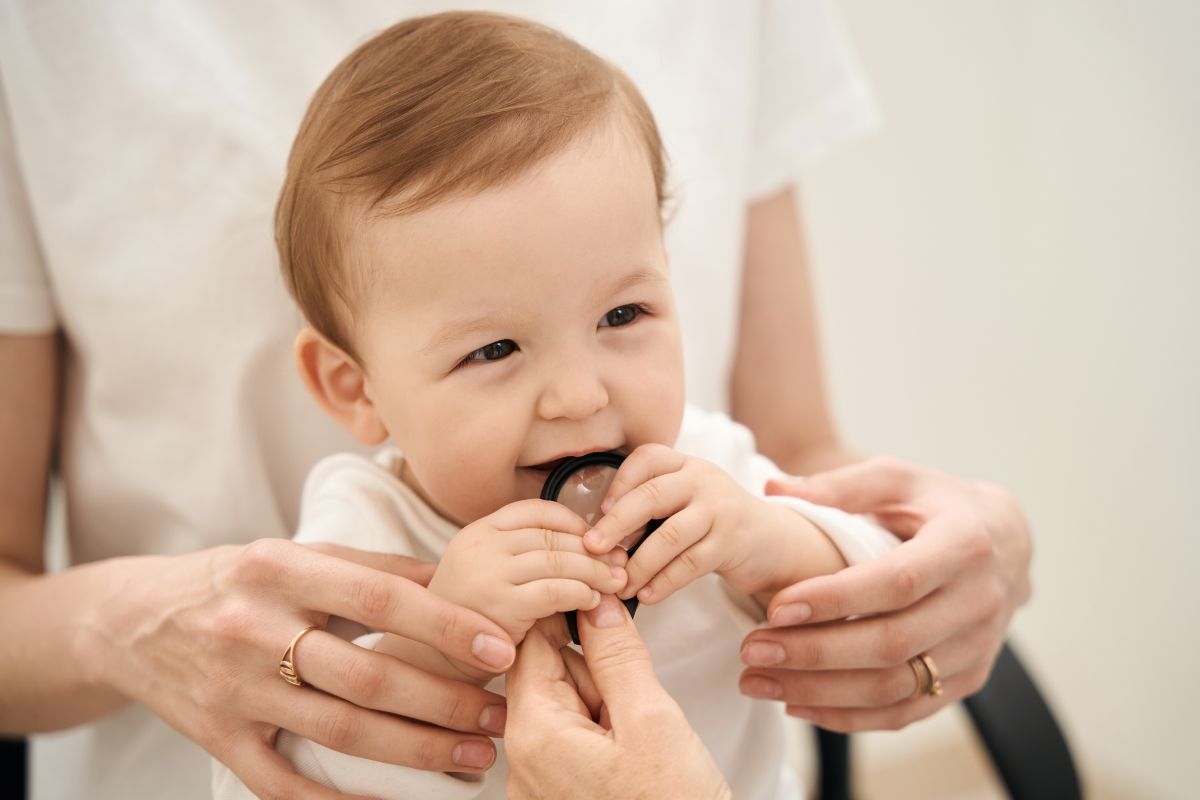
Teething is one of the earliest dental stages children experience, and for many parents, it can also be one of the most stressful. As baby teeth begin pushing through the gums, infants may become fussier, drool more often, or have changes in sleep and feeding habits.
Every child responds differently to teething. Some babies show very few symptoms, while others may become noticeably uncomfortable during the process. Understanding what is considered normal can help parents feel more prepared and avoid unnecessary worry.
For families learning about early pediatric oral health, knowing how teething works and how to manage symptoms safely can make the process easier for both children and parents.
When Teething Usually Starts
Most babies begin teething between 4 and 7 months of age, although the timeline can vary from child to child.
In many cases:
- The lower front teeth appear first
- Upper front teeth follow afterward
- Additional teeth gradually erupt over the next few years
Some children begin teething earlier, while others may not get their first tooth until closer to their first birthday.
Differences in timing are often completely normal.
Common Signs of Teething
As teeth begin moving through the gums, babies may experience mild irritation or discomfort.
Parents commonly notice:
- Increased drooling
- Irritability
- Chewing on objects
- Swollen gums
- Mild fussiness
- Changes in sleep patterns
- Increased desire to bite or gnaw
These symptoms are usually temporary and may come and go as different teeth erupt.
Drooling During Teething
Excessive drooling is one of the most common teething symptoms.
While drooling itself is generally harmless, constant moisture around the mouth may sometimes cause:
- Mild skin irritation
- Chin rashes
- Redness around the lips
Parents can gently wipe the area and keep the skin dry when possible to reduce irritation.
Chewing Helps Relieve Pressure
Many babies instinctively chew on objects while teething because pressure on the gums may feel soothing.
Safe options may include:
- Teething rings
- Soft silicone teethers
- Cold washcloths
- Age-appropriate teething toys
Parents should avoid objects that are too hard or small enough to become choking hazards.
Cold items may sometimes provide temporary comfort for sore gums.
Mild Gum Swelling Is Common
As teeth push through the gums, some swelling or tenderness may occur near the eruption area.
The gums may appear:
- Slightly red
- Puffy
- Sensitive to touch
In most cases, this irritation improves once the tooth breaks through the gum surface.
Does Teething Cause Fever?
Many parents associate teething with fevers, but teething itself usually does not cause high fever.
A mild increase in temperature may happen occasionally, but symptoms such as:
- High fever
- Severe diarrhea
- Vomiting
- Significant lethargy
are not typically considered normal teething symptoms.
If a child develops more serious symptoms, parents should contact a pediatrician or healthcare provider for evaluation.
Sleep Changes During Teething
Some babies experience temporary sleep disruptions while teething.
Discomfort from gum pressure may make it harder for infants to settle comfortably at night.
Parents may notice:
- More nighttime waking
- Fussiness before bed
- Increased desire for comfort
These changes are often temporary as the tooth continues erupting.
Feeding Habits May Change
Teething can sometimes affect eating patterns temporarily.
Some babies may:
- Refuse bottles briefly
- Prefer softer foods
- Want to chew more frequently
- Become irritable during feeding
Cold foods or chilled teething items may occasionally feel more soothing during this stage.
Avoid Unsafe Teething Remedies
Parents should be cautious about certain over-the-counter teething products or home remedies.
Some products may not be recommended for infants, especially those containing ingredients that could cause numbness or safety concerns.
Parents should always:
- Follow pediatric recommendations
- Use age-appropriate products
- Avoid unsafe chewing objects
- Monitor children while using teething toys
If parents are unsure about a product, consulting a healthcare provider or pediatric dentist may help clarify what is safe.
Oral Care Should Start Early
Even before all baby teeth appear, early oral hygiene is important.
Parents can begin by:
- Cleaning gums gently with a soft cloth
- Using infant toothbrushes once teeth appear
- Avoiding sugary drinks in bottles
- Scheduling early dental visits
Healthy oral habits during infancy may support better dental health as children grow older.
Why Baby Teeth Matter
Baby teeth help support:
- Chewing
- Speech development
- Facial growth
- Proper spacing for adult teeth
Even though primary teeth eventually fall out, keeping them healthy remains important for overall oral development.
Preventive dental care during early childhood may help reduce future dental problems.
Pediatric Dental Care in Lawrence, New York
Families in Lawrence and nearby communities often have questions about infant oral health, teething, and early dental development.
At Long Island Pediatric Dentistry, children receive preventive and pediatric dental care focused on healthy smile development from infancy through adolescence. Parents often benefit from professional guidance during early stages like teething, feeding transitions, and first dental visits.
For families learning more about pediatric oral health, early dental care may help support healthier habits and long-term comfort as children grow.
When to Contact a Pediatric Dentist
Most teething symptoms improve gradually on their own. However, parents should seek professional guidance if they notice:
- Significant swelling
- Persistent discomfort
- Feeding difficulties
- Signs of infection
- Delayed tooth eruption concerns
Monitoring oral development early can help parents better understand what is normal during teething and childhood dental growth.
FAQs
At what age do babies usually start teething?
Most babies begin teething between 4 and 7 months old, although timing varies.
What are the first signs of teething?
Common signs include drooling, chewing on objects, swollen gums, and mild irritability.
Can teething cause fever?
Teething may cause mild discomfort, but high fever is not usually considered a normal teething symptom.
How can I soothe my baby’s gums during teething?
Cold teething rings, soft teethers, and gentle gum pressure may help provide temporary comfort.
When should my child first visit a pediatric dentist?
Many children benefit from an early dental visit during infancy or after their first teeth begin appearing.